

Dinner gets decided over and over again, every. single. day. If you’re tired of constantly starting the process from scratch, learning how to create a master list of dinner ideas can be the best way to simplify weeknights.
You’re not building a strict plan. You’re building a reliable list of delicious and (usually) nutritious family dinner ideas and easy dinner recipes you can pull from when your brain is done making choices.
Let’s talk about how important this meal planning idea really is for easier everyday cooking, and we’ll walk through simple ways to create your own dinner ideas master list…
This list is the foundation of a complete yet simple system that can make your kitchen feel a lot easier to manage. You can see how it all fits together in the master meal list method.
This post may contain affiliate links. If you choose to purchase through an affiliate link, I may receive a small commission at no additional cost to you. You can see my full disclaimer here.
What a Master List of Dinner Ideas Does for You
A master list of dinner ideas is exactly what it sounds like: one place where you keep track of the dinners your household actually eats. Not the recipes you meant to try. Not the meals that looked amazing on Pinterest but require ten ingredients you never buy. The meals that show up again and again because they work.
Think of it as your personal dinner idea bank. It can be short or long, messy or organized. The point is that it exists – not just in your head – and it’s easy to use.
And if you’re just learning how to meal plan, this is a great place to start because it gives you a foundation. Instead of trying to plan an entire week from a blank page, you’re choosing from meals that already fit your life.
But before you build your list, there’s something important to understand…
Why Most Meal Planning Fails
A lot of meal planning ideas fall apart for predictable reasons:
- You start fresh every week and spend a ton of time thinking and researching
- You save recipes you don’t actually cook
- You plan meals that don’t match your schedule or energy
- You buy random ingredients for one meal and then they sit in the fridge
- You try to force novelty when what you really need is reliability
A dinner ideas master list helps because it removes the repeated failure points. You don’t need a new plan every Sunday. You need a set of meals you can rotate through, mix and match, and lean on when life is busy.
So instead of constantly searching for new recipes, start here…
Step 1: Start With Meals You Already Cook On Repeat
The fastest way to build your list is to stop searching for inspiration and start paying attention to what you already do.
Here are a few easy ways to pull meals from your own habits:
- Think back through the last two weeks or month of dinners
- Scan your grocery receipts or online order history
- Look at your go-to store items (tortillas? pasta? rice? ground meat? produce?)
- Check any old meal plans you’ve written down
- Open your phone photos if you tend to snap pictures of meals
You’re looking for patterns, especially family favorite meals that show up without you trying too hard.
If you’re stuck, some of my quick and easy home-cooked meal ideas might jog your thought process and serve as meal reminders for dishes you like to make… and your family likes to eat.
This step isn’t about perfecting your list. It’s a quick-start way to brainstorm what already works and gives you a base to make everything else easier.
Next comes a small shift that makes the list far easier to use.
Step 2: Separate Everyday Meals from Occasional Meals
Not every dinner belongs on your everyday list.
A lot of people accidentally build a list filled with ‘special’ meals. Then the list feels hard to use because it doesn’t match an average Tuesday.
Create two simple sections:
Everyday meals
These are your weeknight workhorses. They fit your time, energy, and budget most of the time. This is the heart of your easy meal list.
Occasional meals
These might be longer, messier, or require extra ingredients. They still belong somewhere – maybe on weekends – just not mixed into the main master list you want to rely on most nights.
This separation makes your new easy family menus feel doable. You’re not staring at a list full of meals that require a full cooking mood.
Now, let’s make sure your list actually works on tired evenings (which is probably MOST evenings if we’re being real-real)…
Step 3: Choose Meals that Fit Your Actual Cooking Energy
Some nights you’re ready to cook. Other nights you’re running on fumes. Your list should reflect both.
I like to build the list with three ‘effort levels.’ You can label them however you want, or you can just make one list for the cooking level you feel most often.
Low-effort dinners
Meals you can make when you’re tired and don’t want to think much. Keep these heavily represented. They’re often what saves your evenings. For me, that usually means crockpot meals (especially soups) and sheet pan dinners.
Remember… the recipe ideas I’ve linked to should remind you of meals you already make. THOSE are the ones that should be on your list.
Medium-effort dinners
These are the meals you can make without dread, but they still require a little attention. That might mean more hands-on time for prep or actual cooking (for example, stovetop cooking vs. crockpot). If things like prepping ingredients or getting the perfect sear relaxes you, then you may want to include more of these dinner ideas.
Higher-effort dinners
Meals you enjoy making when you have time or want something different. You may not have ANY of these dinner ideas on your list, and that’s totally okay.
This is the point where realistic meal planning becomes less stressful. You’re not pretending every day has the same capacity. You’re planning for the range of energy you actually have.
You’ll want to keep this running list of easy dinner recipes that are truly simple for YOU, which may not be the same as ‘simple’ on Instagram or Pinterest.
Okay, here’s the part that really starts to make everything easier later…
Step 4: Look for Ingredient Overlap
When you look over your list, notice which meals share ingredients. These overlaps are gold because they help you build a simplified kitchen that supports your dinners without excess.
Examples of overlap might look like (your list could be completely different and unique to YOU):
- tortillas used for tacos, wraps, quesadillas
- rice used for bowls, stir-fry, burrito bowls
- pasta used for baked pasta, quick skillet pasta, soups
- ground meat used for tacos, spaghetti, chili, burgers
- frozen veggies used for stir-fry, sheet pan, soups
Ingredient overlap is what begins to turn your list into a system that works for complete family meal planning. It’s also what helps you waste less because you’re buying foods you’ll use again.
At this point, less really does work better.
Step 5: Narrow Your List to Reliable Repeat Meals

This is where a lot of people get tripped up. They think the ‘best’ list is a long list with plenty of dinner ideas.
Okay, a long list can be nice if you really like variety and ACTUALLY cook a lot of different meals that everyone enjoys. But we’re aiming to simplify all.the.things. And honestly, for most people a shorter list really makes things easier.
Start by circling the meals that meet these standards:
- you make them without needing a full recipe every time
- everyone eats them (or at least doesn’t complain)
- the ingredients are easy to keep around and prepare
- the meal doesn’t require perfect timing or complicated steps
These become your core repeat meal ideas.
From there, you can build a simple dinner rotation. Rotation doesn’t have to mean a strict schedule. It just means you’re choosing from the same pool of favorites often enough that dinner becomes easier.
You might be wondering how big this list should actually be…
How Many Meals Should Be on Your Master List
If you’re new to this, here’s a practical starting point:
- 10–15 dinners for your first version
- 20–30 dinners once you’ve been using it for a while
If you’re feeding a family and like to shift your dinner ideas with the seasons, you might land closer to 25–40 over time. But you don’t need to start there.
For meal planning for beginners, a smaller list is simple and perfectly adequate. You can always build your list over time.
A helpful rule: if you don’t cook it at least once or twice a month, it probably doesn’t need to be on the main list.
Okay, great, now you have a list… but what do you DO with it?
Organizing and Using Your Master Dinner Idea List
When it comes to organizing, remember… the most helpful list is the one you can find quickly. And that doesn’t mean all in your head. If you’ve read this entire post and you’re still thinking, ‘I already have a master list of dinner ideas in my brain,’ then please trust me when I tell you that getting it down ‘on paper’ actually makes things so.much.easier.
Where to keep it:
- a note on your phone
- a whiteboard on the fridge
- a printed page inside a cabinet door
- a handwritten meal plan list in a binder if you like paper systems
The point is visibility. Your easy dinner ideas list should feel like a helpful tool, not another document you forget about.
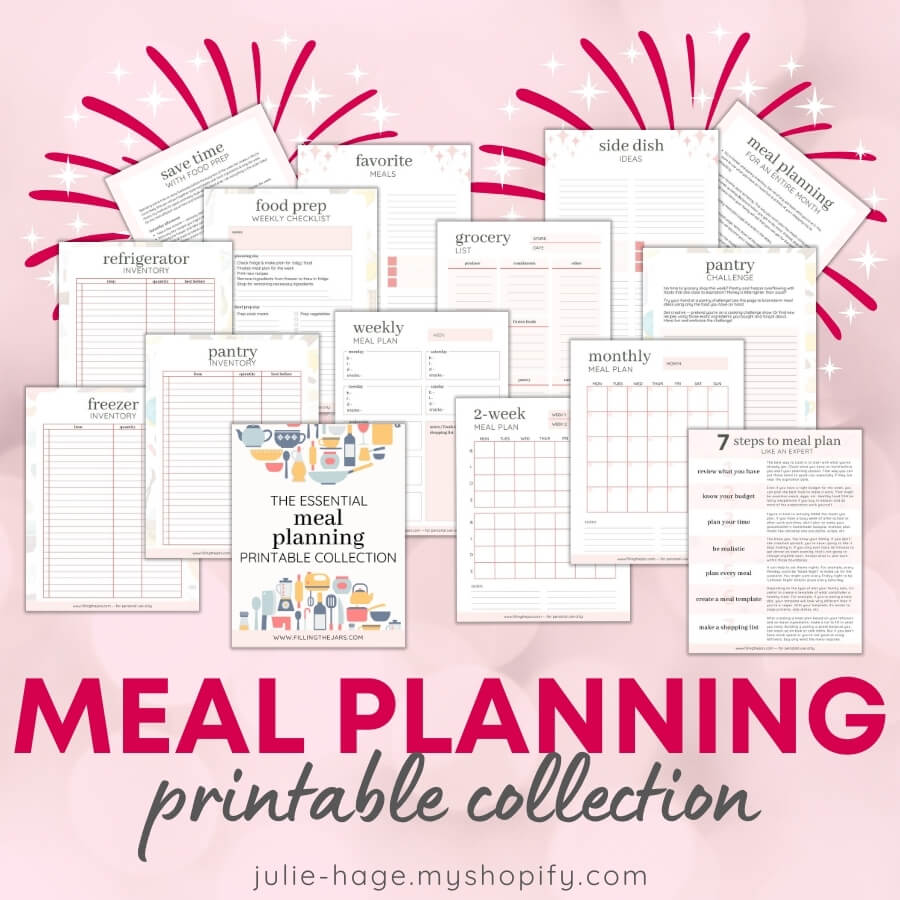
For organizing your meal planning and master meal list, try using the coordinated printables from my Essential Meal Planning collection.
Once your list exists, you can stop constantly starting from scratch when you do meal planning. Here are a few low-stress ways to begin using it:
Choose 4-ish dinners for the week
You don’t necessarily need a full seven-day plan, although you absolutely CAN do that. Some weeks, you’ll want to pick a handful of meals and keep the rest flexible. That may mean leftovers, going out to eat, social engagements, or occasionally trying a new recipe. This alone can make your weekly dinner plans feel manageable.
Match meals to your schedule
Busy day = low-effort meal. Slower day = something that takes longer. Your sorted list makes it easier to choose quickly.
You may eat some meals from your list every single week and others once or twice a month. Stay flexible, you don’t have to eat the meals from your list in any particular order.
Keep a couple of backup dinner ideas handy
These are meals you can make with pantry or freezer staples. They save you when the day goes sideways. I don’t have an Instant Pot, but I know quite a few people who use one to cook food from a frozen state in a very short time. If your life is full of last-minute changes, then you’ve probably got a few of these meals in your back pocket. Put them on the list.
Let repeats be normal
A master list works because you cook the same meals that you and your family actually prefer. That’s not boring. That’s efficient.
This is different from a meal planning strategy like strictly themed meal nights that repeat every week. That idea might SOUND simple, but most people usually end up spending too much time looking for new recipes to fit into the nightly themes.
With your personalized master list, you already know what you’re going to cook. All you have to do is sort them into the nights that make the most sense for your variable family schedule.
Before you finish, a few common pitfalls are worth avoiding…
Common Mistakes that Make Meal Lists Fail
Here are the big ones to avoid:
Making the list aspirational
If the meal looks nice but you never cook it, it doesn’t belong on the main list.
Adding meals nobody likes
It’s tempting to add what you WISH your family ate. Go with what works as long as it meets your minimum standards.
Over-organizing too soon
Start with a simple list. Organize later if it helps.
Treating the list like a finished project
This list is allowed to evolve. The goal is use, not perfection.
Forgetting to include REALLY easy dinners
Your list needs some meals that feel doable on your lowest-energy nights, even if they’re not ‘perfectly balanced’. I won’t tell anyone if breakfast cereal ends up on your easy dinners list.
Ready to make this practical right away?
A Simple First Version Master List You Can Create Today
Here’s a quick way to build your first list in under 10 minutes:
- Write down 10 dinners you already make
- Add 5 more that your family eats reliably
- Circle 5 low-effort meals you can make without much thought
- Put a star next to meals that share ingredients
- Pick one place you’ll keep the list where you’ll see it
That’s enough to get started.
As you cook over the next few weeks, add meals that work. Cross off meals that don’t. This becomes your custom master list of dinner ideas that gets stronger with use.
Once your list exists, everything else becomes simpler.
What Comes Next After You Create Your Master Meal List
Once you’ve built the list, you can make dinner even easier by building your kitchen around it. That’s the heart of family meal planning that doesn’t drain you.
Next steps (choose one, not all at once):
- Build a small pantry that supports your core meals
- Stock a small freezer with a few dependable ingredients
- Create a repeat grocery list based on your list of meals
Those pieces turn your list into something you can rely on week after week.
More Resources for Meal Planning
Simple Monthly Meal Planning (How To Make It Work For You)
No Cook Dinners For Summer: 28 Easy Meal Ideas For When It’s Too Hot To Cook
Struggling with organizing your meal planning? My Essential Meal Planning Printables are here to help you out. Whether you’re planning meals for a week or a month, these pages are designed to fit your lifestyle. Say goodbye to wasted food and hello to easy, stress-free meal planning!
Closing Thoughts: Dinner Gets Easier When Decisions Are Already Made
You don’t need more recipes. You need fewer decisions.
When you have a working master list of dinner ideas you can count on, dinner stops being a daily puzzle. You cook what you already know works, you shop with less guesswork, and you get a little more mental space back at the end of the day.
If you want to start simple, start with the list. It’s the easiest win.
Once your list is in place, you can build the rest of your kitchen around it. The master meal list method shows how your meals, pantry, freezer, and grocery list all work together.
You’ve got this!
Did you enjoy this post? Know someone else who might like it? Please take a moment to share on Pinterest, Facebook, or your favorite social media… (Click the sharing buttons at the bottom of the post.) Thank you!