

If you’ve ever struggled with how to plan goals for the new year in a way that actually works for real life, you’re not alone. Yearly goal planning can feel overwhelming, stressful, or like something you’ve already failed at before you even start – especially for those of us who tend to overthink all.the.things.
That’s why I want to walk through planning for the new year with a printable Goal Journey Annual Goal Planner. We’ll talk about ways I’ve found to planning and setting goals. We’ll also cover the how and why of this printable planner’s structure and how to make the concepts work for you, your goals, and your capacity.

This post may contain affiliate links. If you choose to purchase through an affiliate link, I may receive a small commission at no additional cost to you. This post is not to be taken as professional medical or mental health advice. All statements are strictly my personal life observations. You can see my full disclaimer here.
My way of planning goals for the new year may not be the exact way you end up doing it – and that’s okay. Everybody has different goals, different responsibilities, and different levels of energy available in a given year. But hopefully you’ll get some good ideas and inspiration from this post.
The planner is flexible by design. You don’t have to print everything. Just print what you want to use, what fits your life right now, and what supports the goals you actually have the capacity to work on this year.
Scroll down toward the bottom if you just want to watch the video walkthrough.
How the Goal Journey Planner Is Set Up
The Goal Journey Annual Goal Planner is based on quarterly and monthly planning, and then it breaks things down just a little bit further than that. This is how I have mine set up.
I use an inch and a half binder because I have a lot of extra pages. If this is your first year using the planner, I would suggest a one-inch binder. It’s more portable, not quite as bulky, and easier to use. I might actually go back to that size, but right now I have a lot of extra work pages in my binder.
I like to print out my monthly pages and use calendar tabs so everything is easy to find. Behind the tabs is where the real work begins… starting with reviewing the previous year so you can plan your goals realistically.
Step One: Review the Previous Year
Before you plan anything new, it’s important to look back. Step one is reviewing the previous year… the things that went well and the things that maybe didn’t go so well. Use the planner’s reflection prompts to help you do this, and I recommend filling them out to give yourself a mental overview of the year before.
If you want to go deeper, fill out lists for achievements, milestones, challenges, and lessons. We learn from our challenges just as much as from our successes.
You can also make a list of unachieved goals. This helps you decide what, if anything, you want to carry forward into the next year.
This step matters because overthinkers often plan goals without considering their actual capacity. Reflection helps you understand what your life truly looks like – your time, your energy, and what you realistically have room for.

Step Two: Choose a Word for the Year
One of my favorite parts of the planner is choosing a word for the year. There’s a printable in the planner, and I also offer it as a standalone free printable.
I like to go through the word list and circle words that speak to how I want to move through the year… the thoughts I want to have, how I want to show up with my family, friends, and in my workspace. I don’t want to overwhelm myself with too many words, so I try not to circle too many. I want one word that gives me an overall direction for the year.
Sometimes a word jumps out immediately. Other times, writing down a few options and revisiting them as you plan your goals helps clarify what fits best. Choosing your word early is important because it becomes a lens for your actions, your thoughts, and the way you approach your goals throughout the year.
Step Three: Brainstorm Goals
Next comes brainstorming goals for the year. There are several categories you can use: personal goals, house goals, adventure and travel, financial goals, professional goals, skills to learn, books to read, personal affirmations, habits to start or break, and important dates.
You don’t need to fill out every list. You may not have many goals this year, and that’s okay. What matters is ultimately choosing goals that match your current capacity. A strong financial focus, for example, can make other areas of life easier, but that doesn’t mean doing everything at once.
As overthinkers, we often try to plan too perfectly because we believe that way we can do all.the.things. This planner is designed to help you focus on what actually matters and what you realistically have the energy to work on.
Types of Goals to Set for Next Year
Obviously, the goals you end up setting are a personal decision. One person’s huge goal is another person’s mini goal.
It’s tempting to set several small goals and avoid thinking about big goals. Small goals seem achievable, big goals are scary.
But I want you to think big… the big projects, dreams, even the scary-big ideas that wander through your mind but haven’t completely materialized yet.
Why?
Because those things can become your priority goals. Setting clear priority goals with mindful focus will motivate you more than an endless list of the same small goals you think you should set (and ultimately fail at) every year.
It doesn’t matter how your goal looks to anyone else. What matters is how YOUR life will change when you accomplish that goal.
You don’t have to set rigid goals for the entire year at once, or plan to accomplish ‘X’ number of things each month. But you do need a direction and something important to strive toward on a regular basis.
Here are a few examples of goals you could accomplish in a year (but – probably – not in the SAME year):
- Declutter your entire home.
- Save up the money to pay off your debt or take an amazing family vacation.
- Build a new career or a successful side hustle.
- Run a marathon (even if you haven’t run in years).
- Read 52 books (or more).
- Enjoy time with family and friends on a more regular basis.
Step Four: Narrow and Prioritize Your Goals With Capacity in Mind

First of all, don’t get too hung up on absolute goals. Life changes so much every year, and you don’t want to set several big goals that could all be blown to bits after a major life event.
Instead, take into account the things you already know will happen – a child’s graduation, a new baby, retirement, etc. Adjust your dream goals for those things.
Jot down several big goals that ‘would be nice’ to reach by the end of the next year.
Then get real. You won’t be able to work on ALL the goals. Mark the goals that seem more realistic.
Now it’s time to create your goal action plans. To start with, try to think about only what you want to accomplish in the next one to three months. Narrow down those big lists into a shorter master goal list, and then start narrowing it down even further with a matrix to help you decide what to work on first.
How many yearly goals should you plan?
That varies depending on your energy level.
My advice is to narrow your focus as much as possible. This is where prioritizing your goals really matters. Use the prioritization matrix if you’re unsure where to start. You don’t have to work on everything at once.
I’m a very low-energy person, so I can only really concentrate on one big goal at a time. I may have 3-4 ‘would be nice’ big goals on my yearly list, but I only PLAN for one at a time.
However, within each 3-month planning chunk, I also usually have another one or two very small goals that I work on as I find time. Those are usually things like reading or journaling – personal goals that aren’t as big and life-changing as my main focus goal.
Having ONE priority goal at a time is always best.
That said, you may have a main goal and one or two smaller goals. For each goal, print a set of goal-setting pages with questions to answer and a page for listing steps to take.
Step Five: Plan Your Goal Timeline – And Keep It Short
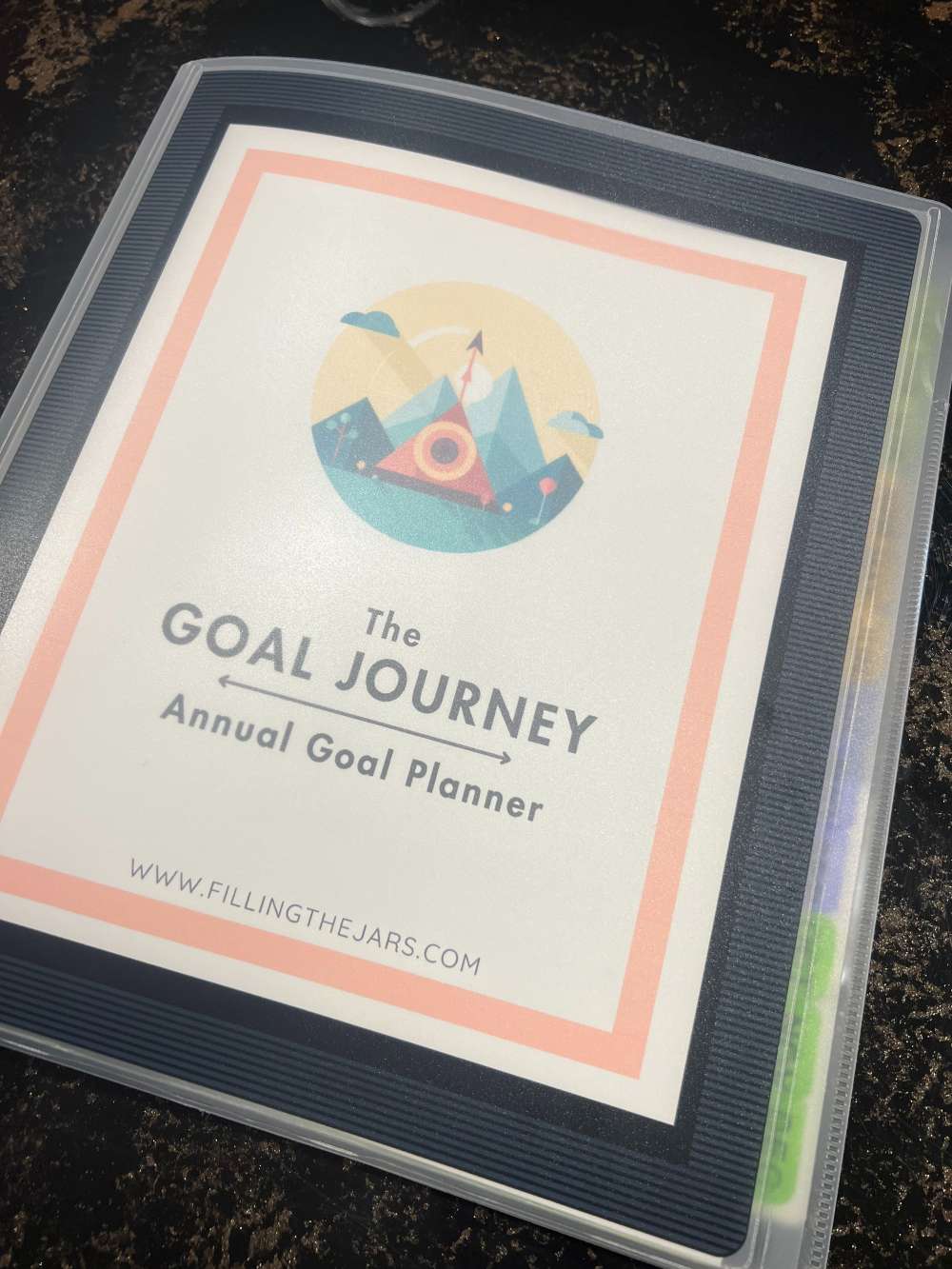
I used to plan for an entire year at a time, and it never worked for me. Now the furthest out I plan is a quarter, and sometimes only a month or even two weeks at a time. There are pages in the Goal Journey Annual Goal Planner to plan exactly this way.
Start With a Quarterly Plan
After narrowing your goals, you’ll want to start planning and working quarterly. This idea comes from Brian Moran’s book The 12 Week Year.
The 12 Week Year is an amazing book if you’re ready to completely change the way you think about and approach goals. However, it is pretty intense, and it will push you to your limits. That said, it’s one of the very few books that are part of my ‘good enough to keep’ physical library.
I tend to think of it as ‘a guys’ book’ which means appreciating and using the concepts, but adapting things to my own life and capacity.
My own book, The One Focus Method, takes a slightly different approach with two-week sprints and simple action steps. The goal is to take action quickly, without overthinking, and focus on one thing at a time.
This approach works especially well for overthinkers because it keeps goals manageable and aligned with your current capacity. You stop thinking and take action while motivation is still there instead of spending months planning and never starting.
Monthly and Weekly Focus
Within each quarter, you can sketch out how each month and each week will look. I print a blank calendar for the month and plan roughly, knowing that not everything will happen exactly as planned.
I keep a master ideas list for each month. You don’t have to do everything on the list. Some things roll over, some get crossed off. The list simply helps you remember.
There’s also a page to break down planning for weeks one and two, then weeks three and four. These can focus on the same goal or different goals depending on your energy and how quickly you work through your goal. The point is to take action and build momentum.
Monthly Reviews and Adjustments
At the end of each month, review what went well, what was difficult, and how the month went overall. Then you ask how you can make next month better and adjust as necessary. Since I know I will make changes, I don’t make rigid plans for more than a month at a time. This helps keep things fluid and moving forward, only concentrating on one step at a time.
Sometimes the adjustments you’ll make are small – one thought, one daily action. Other times they’re bigger. This is a journey through the year, and you can start at any time. January is popular because motivation is high, but the system works whenever you begin.
Every three months, decide whether it’s necessary to make any BIG changes. It could be time to let something go. Or you may have accomplished a big goal and decide you have space in your life to move on to a new goal… which is so amazing and exciting when it happens!
Resources For Your Goal Planning
Check out this video walkthrough of the Goal Journey Annual Goal Planner and my goal-planning method (you may need to turn on the volume in your browser tab settings if there is no sound):
The Goal Journey Annual Goal Planner – This goal planner printable is designed to streamline your goal-setting process, allowing you to focus on one goal at a time and adapt as life evolves. Get the extra stuff out of your head, let go of the regrets and ‘should-dos,’ and start accomplishing the goals that really matter to YOU.
The 12-Week Year — I love this book because of how author Brian Moran emphasizes the importance of consistent tasks.
The ONE FOCUS Method – My book (available in paperback or ebook format) written for overwhelmed overthinkers who want to finally follow through on their goals. In this practical quick-read guide, you’ll get tips on how to develop the finishing instinct, boost your motivation, and confidently get things done. With simple, actionable steps, you can start applying the method in under an hour – no matter how busy life gets.
Avery Flexi-View 3-Ring Binder – I recommend the 1” version for ease of use.
Avery Pre-Printed Jan-Dec Plastic Dividers – These are great for organizing monthly planning.
More of my picks for planning and binder accessories
My life improvement reading list
Concluding Thoughts on New Year Goal Planning
Keep in mind, the year doesn’t always go smoothly, even when we start out with plenty of new years motivation. Some years are harder than others. My hope is that this planner helps you roll with the changes and still accomplish your goals – or at least make meaningful progress – without overwhelm.
The Goal Journey Annual Goal Planner is printable, flexible, and designed to help plan goals in a way that respects your capacity and works for your life.
Whether or not you use this planner, please give yourself permission to focus on what you can realistically handle this year, and then actually DO the things that will improve your life.
You’ve got this!
Did you enjoy this post? Know someone else who might like it? Please take a moment to share on Pinterest, Facebook, or your favorite social media… (Click the sharing buttons at the bottom of the post.) Thank you!
